Common Shipping Container Moving Mistakes That Cause Damage, Delays, and Extra Costs
Shipping containers are everywhere, so people assume they’re easy to move. In reality, moving a container is a heavy-load transport job with tight tolerances: the wrong trailer, a soft driveway, one low wire, or one skipped permit can turn a “simple move” into a damaged container, a blocked road, or a canceled delivery.
This article lays out the most common mistakes people make when moving and transporting shipping containers in the U.S., why they happen, and what a qualified container mover does differently to prevent them.
Mistake 1: Assuming Any Trucker or “Hotshot Guy” Can Move a Container
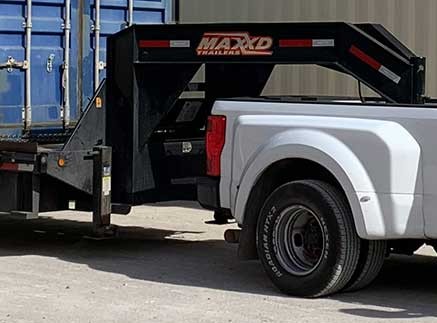
A shipping container is not a palletized shipment. If the container is sitting on the ground, a standard truck and trailer usually can’t load it. Even if a driver is willing, willingness doesn’t equal capability.
Why it causes problems:
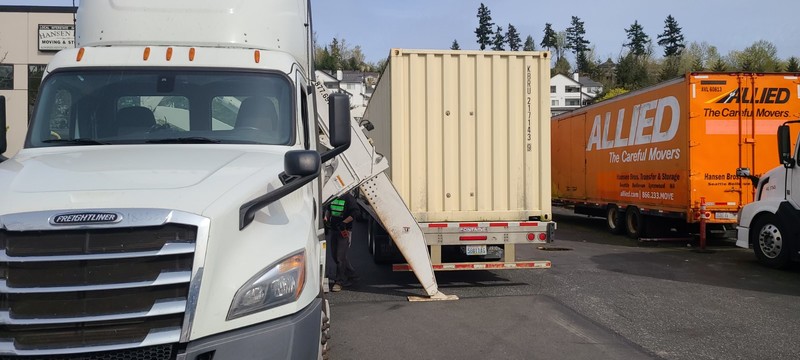
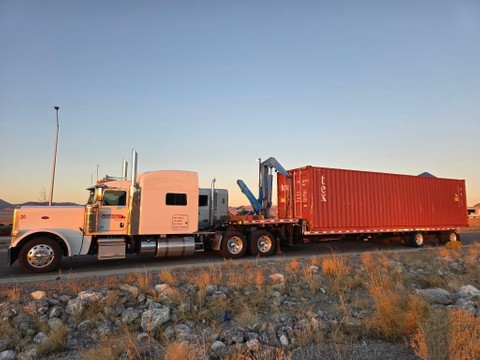
Without container-specific equipment (side loader, tilt-bed rated for the load, crane, proper chassis), the driver may arrive and realize they can’t safely pick it up the container. That creates delays, rescheduling fees, and sometimes emergency equipment rentals at premium cost.
When receiving a quote for your container transport, make sure to ask them how they plan to transport it and if they have the means to self-load/unload.
What pros do instead:
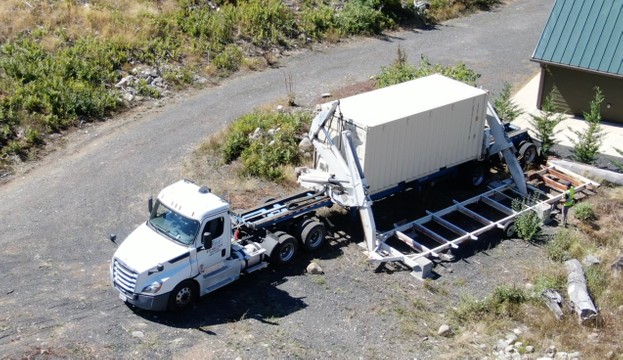
Qualified container movers confirm site and weather conditions, and work closely with you to ensure the right equipment is sent. Verifying the entire move from start to finish is handled with care.
Mistake 2: Not Knowing the Container’s Weight (or Ignoring It)
People often know the container is “mostly full” but don’t know the actual weight. That’s a major error because weight determines trailer choice, permit needs, route restrictions, and loading method.
Why it causes problems:
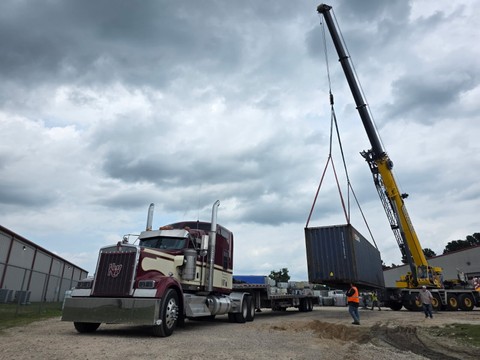
A loaded container can exceed common legal weight thresholds depending on cargo and equipment configuration. If the mover assumes it’s light and it isn’t, you can end up with dry run fees, demurrage, and additional charges.
What pros do instead:
They ask for the best available weight estimate, identify the cargo type (dense vs light), and plan the equipment accordingly. If need be, they’ll ask for photos of the site and of the interior of the container so they can get a feel for the weight. If they think there is reason for concern, they might send someone out to conduct a site inspection.
Mistake 3: Choosing the Wrong Delivery Method (Tilt-Bed vs Side Loader vs Crane)
Customers commonly request a method because it “sounds easier,” not because it fits the site and container condition.
Why it causes problems:
Each method has real constraints:
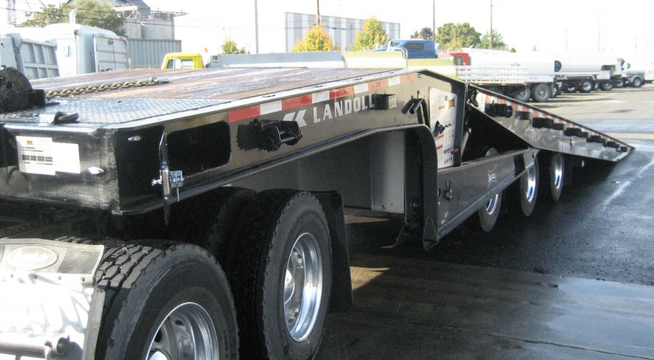
Tilt-bed is often fine for empty or lighter containers, but it requires a long straight approach and can drag or scrape if the surface isn’t ideal.
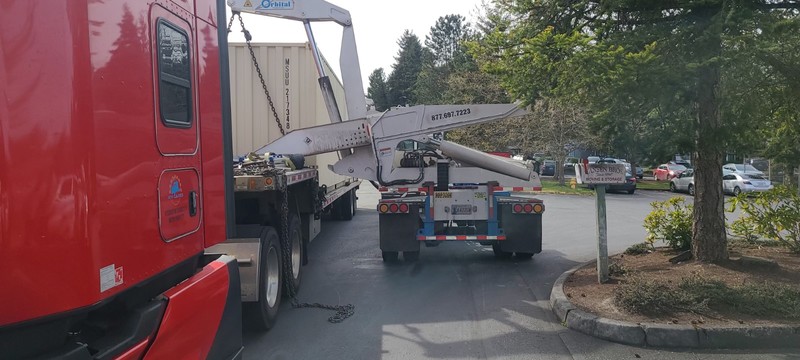
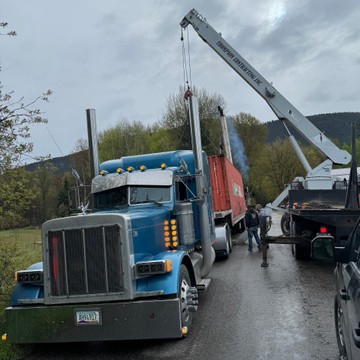
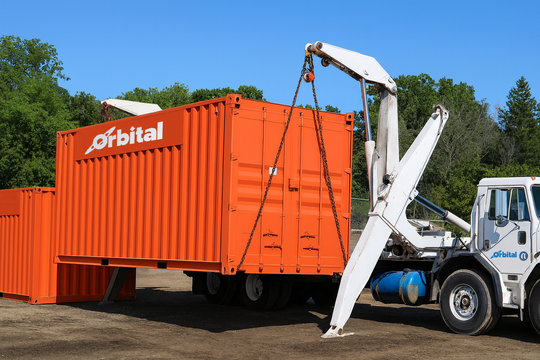
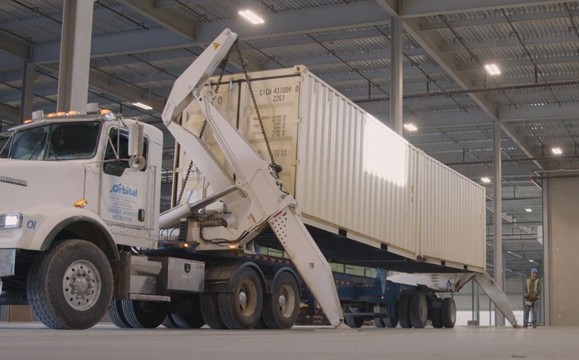
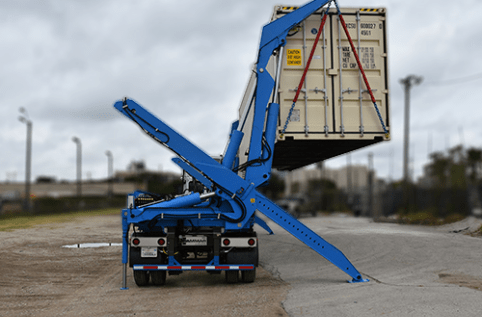
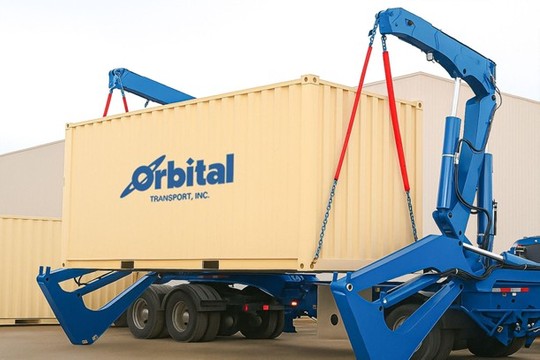
Side loader is excellent for loaded containers and ground placement, but it needs adequate side clearance and stable ground for outriggers.
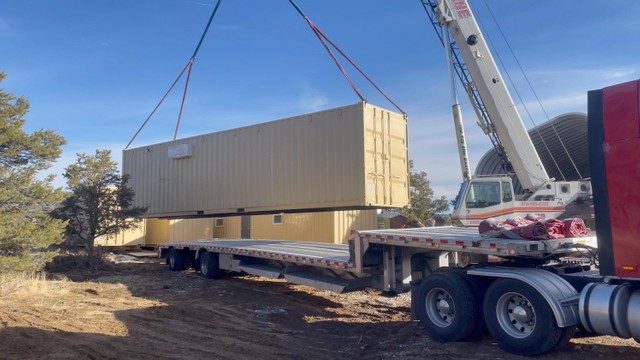
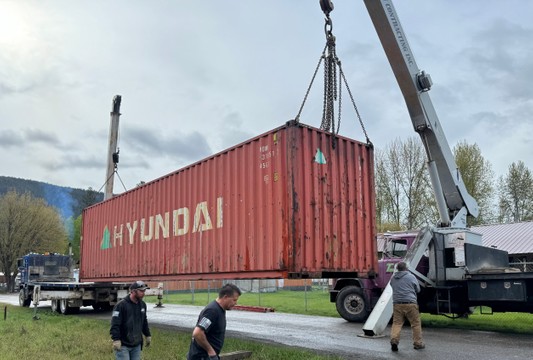
Crane allows placement over obstacles or farther from the road, but it adds cost, requires overhead clearance, and must be properly sized for the container weight.
If the wrong method is chosen, the mover may not be able to place the container where you want it, or the move becomes unsafe.
What pros do instead:
They select the method based on container weight, access, ground conditions, clearance, and placement requirements—not preference.
Mistake 4: Skipping the Site Assessment (or “Eyeballing It”)
Many container moves fail because the site is the problem, not the container.
Why it causes problems:
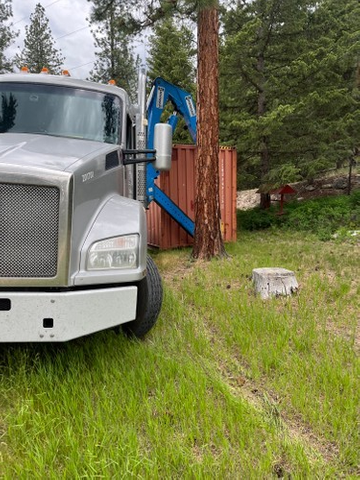
Container-moving trucks are large and heavy. Common site issues include:
Tight turns, narrow lanes, weak culverts
Soft ground that won’t support a loaded truck or outriggers
Sloped or uneven surfaces that twist the container during lifting
Low wires, branches, soffits, or gate openings
Limited room to stage and maneuver
When the truck can’t safely access the site or deploy the lift, the move stops.
What pros do instead:
They ask detailed access questions, request photos/video, sometimes do a site visit, and set clear requirements for access and placement before dispatch.
Mistake 5: Forgetting Overhead Clearance (Especially Power Lines)
This is one of the most dangerous mistakes.
Why it causes problems:
Cranes, booms, and lifting arms can encroach into overhead space quickly. Even if the container clears a line, the lifting equipment might not. Power lines, cable lines, and tree limbs can stop a job instantly—or create serious safety hazards.
What pros do instead:
They evaluate overhead clearance as a non-negotiable safety item. If clearance is questionable, they change method, change approach, or require site prep (trimming, alternate placement, utility coordination).
Mistake 6: Expecting “Precision Placement” Without Paying for the Right Equipment
People often want the container tucked behind a garage, placed between two buildings, or dropped inside a fenced yard—without accounting for access limitations.
Why it causes problems:
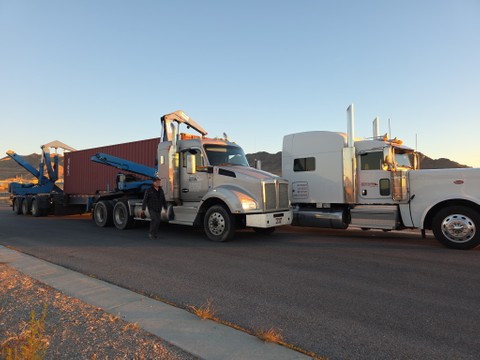
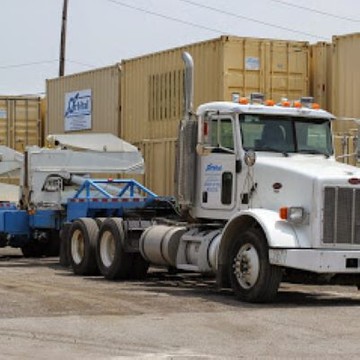
A side loader generally places a container adjacent to the truck. A chassis delivery leaves the container elevated unless unloading equipment is available. If the location requires the container to be lifted over obstacles or set deeper onto a property, that’s a crane-style placement.
What pros do instead:
They match equipment to placement complexity and communicate what’s possible before the move. If you need placement beyond the truck footprint, they plan for it.
Mistake 7: Not Preparing the Ground Where the Container Will Sit
A container can be set down “successfully” and still be a problem later.
Why it causes problems:
If the ground isn’t level and stable, the container can:
- settle unevenly
- twist out of square (making doors hard to open)
- sink into soft soil
- pool water underneath and accelerate corrosion
What pros do instead:
They advise on stable, level base prep (compacted gravel, blocks, timbers, pads) and confirm the drop zone can support concentrated weight.
Mistake 8: Leaving Doors Unsecured or Contents Unbraced
This is common with customer-loaded containers.
Why it causes problems:
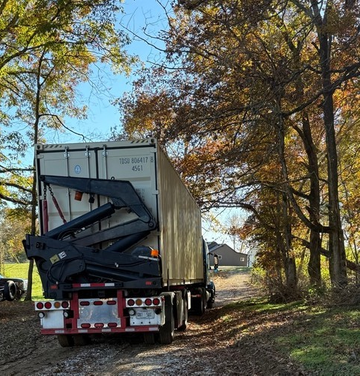
Vibration, leaning during loading, or sudden braking can shift contents. If items aren’t braced, they can slam into doors. Doors that aren’t properly secured can also swing during handling.
What pros do instead:
They recommend basic load bracing, door security steps, and communicate how the container will be lifted so you can prepare interior cargo accordingly.
Mistake 9: Using Inappropriate Lifting Methods (Small Forklifts, Improvised Rigging)
Trying to save money by “making it work” is where things go wrong fast.
Why it causes problems:
Containers require lifting at structurally appropriate points. Using short forks, lifting from one side, dragging, or attaching chains incorrectly can:
- damage the container frame
- compromise the floor
- cause tip-over events
- create uncontrolled swings
What pros do instead:
They use approved lifting points and equipment designed for container handling, with trained operators who understand load balance and structural stress.
Mistake 10: Not Confirming Permits, Routing, and Timing Restrictions
Even when the container fits dimensionally, weight or routing can be the hidden issue.
Why it causes problems:
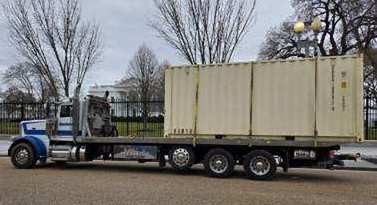
Overweight loads are not permitted, and certain routes may be restricted due to bridges, construction, or local rules. Some municipalities have time-of-day constraints for large moves.
What pros do instead:
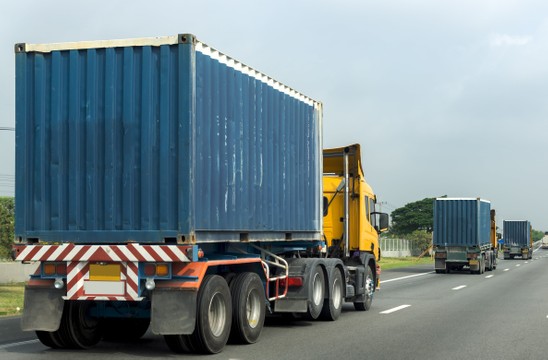
They plan routes around restrictions, handle permits when required and schedule the move to minimize risk of enforcement delays.
Mistake 11: Hiring a Broker Who Subcontracts to Whoever Is Available
Not all brokers are bad, but generally brokers will look for the best rate possible instead of looking for the right operator and equipment.
Why it causes problems:
A broker may quote the job without understanding access constraints, then dispatch a carrier that doesn’t have the right equipment. You find out only when the truck arrives.
What pros do instead:
They plan routes around restrictions, handle permits when required and schedule the move to minimize risk of enforcement delays. Dedicated container movers control equipment and crew selection, or they manage subcontracting tightly with verified container-capable partners.
Mistake 12: Not Getting the Move Plan in Writing
A container move isn’t just pickup and drop. It’s method, equipment, placement, responsibilities, and constraints.
Why it causes problems:
Misunderstandings happen when:
When it is not verified what equipment will be used to load/unload and haul your container.
When information isn't communicated clearly.
The contract isn't read thoroughly.
Expectations are not clearly communicated.
What pros do instead:
They document assumptions and requirements: access, method, placement expectations, what the customer must prep, and what triggers reschedule or additional equipment.
![reasonsIcon[1].png](https://static.spacecrafted.com/bda5f7aa080047deb4815a39a626dc0d/i/d73f1e31d2ef483c9a344c6cf1110813/2/GCuCv726gZycFxatRCb7iU/reasonsIcon%5B1%5D.png)
A Practical “Avoid Mistakes” Checklist (Use This Before You Book)
- Before you hire anyone, make sure you can answer these:
- Is the container empty or loaded, and roughly how heavy?
- Is it on the ground, on blocks, on a chassis, or stacked?
- What is the pickup/drop surface (asphalt, gravel, grass, slope)?
- Are there tight turns, narrow roads, or weak driveways/culverts?
- Are there overhead wires, branches, or rooflines near the lift zone?
- Do you need precision placement beyond what a truck can reach?
- Who is handling permits if the load is overweight?
- What equipment is the mover bringing, specifically?
- Are insurance and liability coverage confirmed in writing?
If a company can’t walk through these confidently, it’s a sign they’re not a true container mover.
Contact Us for Your Container Move & Transport
Whether you're relocating a single loaded container or coordinating multi-site logistics, Container Movers delivers the equipment, operational knowledge, and standardized processes required for safe, reliable container handling nationwide.
Contact our team to schedule a move or request a technical consultation.