South Carolina Container Moving Specialists

Shipping Container Transportation in South Carolina

Professional shipping container transportation for port, intermodal, manufacturing, commercial, construction, agricultural and residential projects throughout South Carolina.

Container Movers coordinates loaded and empty shipping container transportation throughout South Carolina for manufacturers, importers, exporters, warehouses, distribution centers, contractors, farms, businesses and property owners.

Whether your move involves Port of Charleston drayage, an intermodal container at Inland Port Greer or Inland Port Dillon, manufacturing freight in the Upstate, or ground-level placement at a construction site, farm or residential property, our team helps match the carrier and equipment to the actual transportation requirements.

From Charleston and the Lowcountry to Columbia, Greenville-Spartanburg, the I-85 manufacturing corridor and the Pee Dee region, we coordinate container transportation around South Carolina's ports, rail facilities, freight corridors and local delivery conditions.

Loaded and Empty Containers 20 ft, 40 ft, 45 ft and High Cube Port, Rail and Drayage Coordination Statewide and Nationwide Service

Industrial Moves

Loaded Containers

Port Pickups

Rail Transfers

Residential Delivery

Nationwide Service

Why Shipping Container Transportation Matters in South Carolina

South Carolina combines one of the Southeast's major international container gateways with an unusually strong inland intermodal, manufacturing and distribution network. The Port of Charleston connects the state with global trade, while Inland Port Greer and Inland Port Dillon extend that container network into the Upstate and Pee Dee regions. The result is a container transportation market that extends far beyond conventional trucking. An international container may require drayage from a Charleston marine terminal, rail transportation to an inland port, local trucking to a manufacturer or distribution center, or specialized equipment for final ground-level placement.

South Carolina's automotive, advanced manufacturing, aerospace, tire, distribution, agricultural and construction industries add additional demand for loaded and empty container transportation. Container Movers helps coordinate these different requirements by matching the container, cargo, terminal, transportation equipment, site access and final placement requirements to the actual project.

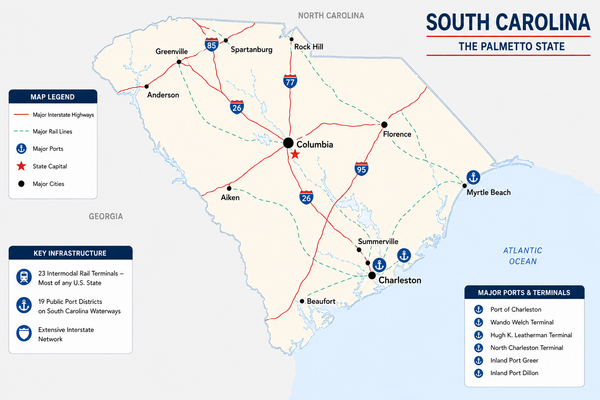
ChatGPT Image Aug 27, 2026, 04_23_42 PM.png

Ports: Port of Charleston, Wando Welch Terminal, Hugh K. Leatherman Terminal and South Carolina marine freight gateways

Rail: Inland Port Greer, Inland Port Dillon, Norfolk Southern and CSX intermodal connections

Trade: Atlantic import-export traffic, Southeast distribution and major I-26, I-85 and I-95 freight corridors

South Carolina Freight Moves Through:

  • Port of Charleston
  • Wando Welch Terminal
  • Hugh K. Leatherman Terminal
  • North Charleston Terminal
  • Inland Port Greer
  • Inland Port Dillon
  • Norfolk Southern Rail Network
  • CSX Transportation Network
  • Interstate 26
  • Interstate 85
  • Interstate 95
  • Interstate 20
  • Interstate 77
  • Charleston–Columbia Freight Corridor
  • Greenville–Spartanburg Manufacturing Corridor
  • Southeast & Atlantic Trade Corridors

Containers Are More Than Freight in South Carolina

Shipping containers serve practical roles far beyond international freight throughout South Carolina. Charleston and the Lowcountry connect containers with maritime trade and construction, the Upstate uses them throughout manufacturing and distribution networks, and rural communities rely on containers for agriculture, equipment storage and property improvements.

Commercial Uses

Construction storage, jobsite offices, warehouse overflow, distribution staging, equipment storage, retail inventory, municipal operations and temporary commercial space.

Manufacturing & Agriculture

Automotive components, aerospace equipment, machinery, tires, production materials, farm equipment, agricultural supplies, food-processing materials and seasonal inventory.

Residential Uses

Backyard storage, workshops, renovation storage, moving projects, garage alternatives, recreational property storage and rural property improvements.

Because containers frequently remain at South Carolina properties as long-term storage or operational assets, the transportation method should be selected with final placement in mind. Loaded weight, driveway access, overhead clearance, soil conditions, turning room and the equipment needed to unload the container can all influence how the move should be planned.

What South Carolina Companies and Property Owners Look For

South Carolina customers need more than a truck capable of hauling a shipping container. A successful move may involve coordinating a container release at the Port of Charleston, an intermodal pickup at Inland Port Greer or Dillon, a just-in-time delivery to an Upstate manufacturer, or ground-level placement at a construction site, farm or residential property.

The transportation plan should account for the container, cargo, terminal requirements, road access, site conditions and final placement before equipment is dispatched.

Port & Drayage Coordination

South Carolina's international container market is centered on the Port of Charleston. Terminal releases, appointments, chassis requirements, drayage and the next stage of transportation should be coordinated so containers move efficiently from the marine terminal to rail, warehouse or final destination.

Intermodal Experience

Inland Port Greer and Inland Port Dillon allow containers to move between Charleston and inland South Carolina by rail. Greer is served by Norfolk Southern and Dillon by CSX, making accurate terminal information and pickup planning especially important.

Loaded Container Capability

South Carolina manufacturers, distributors and agricultural businesses frequently need containers transported while loaded with machinery, components, materials or inventory. Total gross weight affects trailer selection, routing and the equipment required at the destination.

Ground-Level Placement

A standard container chassis is designed primarily for transportation and does not provide ground-level unloading. Sideloaders, Landoll trailers, tilt-bed equipment and crane-assisted configurations may be needed when the container must be positioned directly on a prepared surface.

Site Evaluation

South Carolina delivery conditions range from paved industrial facilities and suburban properties to coastal sites, farms and rural roads. Turning room, overhead clearance, drainage, soft soil and ground stability can determine whether heavy container-moving equipment can safely reach the placement area.

One Coordinated Move

Customers benefit when terminal pickup, drayage, rail connections, highway transportation, unloading and final placement are considered as parts of one logistics plan. Container Movers helps identify these requirements before dispatch so the selected carrier and equipment match the actual move.

Ready to Move Your Shipping Container?

Whether you are transporting a 20 ft Conex box, a loaded 40 ft shipping container, an office container, a modified unit or multiple containers between South Carolina facilities, Container Movers can help coordinate the appropriate equipment and carrier for your project.

Common Container Moving Challenges in South Carolina

South Carolina container transportation can involve very different operating conditions within a relatively compact state. A move may begin at a busy Charleston marine terminal, travel through an inland rail facility, serve an Upstate manufacturing plant or finish on a rural, coastal or residential property where ground conditions determine whether final placement is practical.

Commercial and Freight Challenges

Port of Charleston Drayage: Marine-terminal container moves require accurate release information, terminal procedures, chassis planning and pickup scheduling. When ground-level placement is required at the destination, the transition from port drayage equipment to specialized placement equipment should also be planned.

Upstate Manufacturing: Greenville, Spartanburg, Greer and surrounding communities support major automotive, advanced manufacturing and industrial operations. Just-in-time production environments make reliable scheduling particularly important when containers carry machinery, components or production materials.

Inland Port Transfers: Containers moving through Greer or Dillon may transition between rail and truck before reaching a manufacturer, warehouse or final destination. Terminal availability, container status and the next transportation step should be confirmed before dispatch.

Interstate Freight Traffic: I-26, I-85 and I-95 carry substantial commercial traffic connecting Charleston with inland South Carolina and neighboring states. Congestion, construction and peak freight periods can affect transportation schedules.

Site, Weather, and Residential Challenges

Coastal Storms & Flooding: Hurricanes, tropical systems and heavy rainfall can affect Charleston, the Lowcountry and other coastal areas. Even after roads reopen, saturated soil and flooded or softened placement areas may not support heavy container-moving equipment.

Lowcountry Ground Conditions: Coastal properties may have sandy soil, drainage issues, narrow access roads or low-lying placement areas. Ground stability should be evaluated before a loaded truck, sideloader or tilt-bed trailer enters the property.

Rural & Agricultural Access: Farms and rural properties throughout the Midlands and Pee Dee may have narrow entrances, drainage ditches, soft shoulders, unpaved lanes and overhead tree branches that affect equipment selection.

Residential & Development Sites: Rapidly growing communities around Charleston, Greenville, Spartanburg, Columbia and Rock Hill may present limited driveway width, neighboring structures, overhead utilities and restricted maneuvering space.

Early planning and proper equipment selection help reduce delays and improve the likelihood of safe, accurate container placement.

Specialized Equipment Used to Move Shipping Containers

Selecting the proper transportation equipment can significantly improve efficiency, reduce handling and help ensure safe container placement. The right equipment depends on container size, loaded weight, access conditions and final placement requirements.

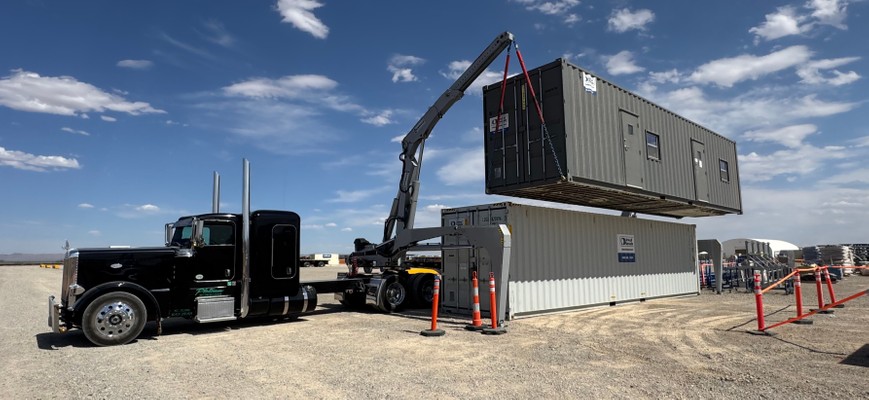
Container Movers Sideloader Truck with office container.jpeg

What Is a Sideloader?

A sideloader is specialized container-handling equipment capable of lifting, transporting and placing shipping containers directly from the side of the trailer. This equipment is ideal when ground-level placement is required or when a separate crane is not practical.

  • Ground-level loading and unloading
  • Reduced equipment coordination
  • Faster delivery scheduling
  • Precise placement capabilities
  • Suitable for many loaded containers
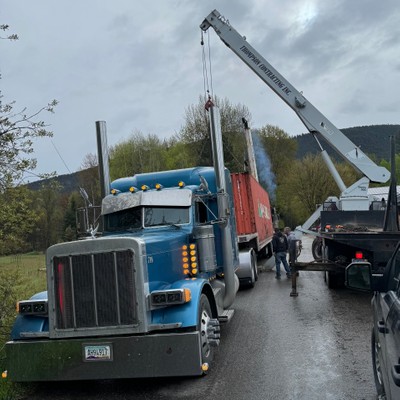
crane moving container from blue truck and trailer

What Is a Trailer-Mounted Crane?

Trailer-mounted cranes combine transportation and lifting capability into one piece of equipment, making them well suited for locations where containers must be placed beyond the immediate side of the trailer.

These systems are commonly used for commercial developments, industrial facilities, waterfront properties and construction projects with limited access.

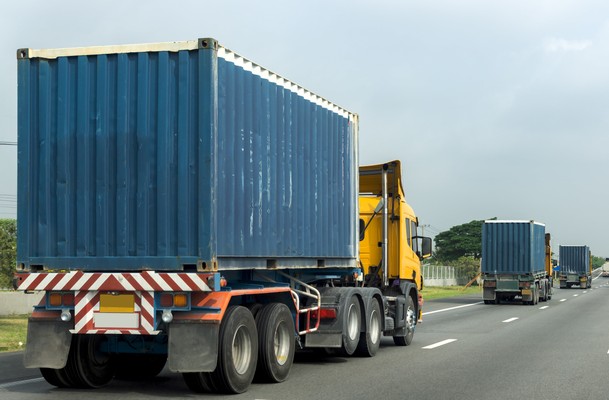
blue shipping containers being transported along highway

What Is a Container Chassis?

Container chassis are specialized trailers designed to transport ISO shipping containers between ports, rail terminals, warehouses, manufacturing facilities and commercial properties.

Because chassis are intended for transportation rather than unloading, additional equipment such as cranes, forklifts or sideloaders may be required at the destination depending on the project.

Container Transport Equipment Comparison: Landoll vs Crane vs Sideloader

Compare the best container transport options based on access, lifting capability, delivery environment, and overall efficiency.

Feature / Requirement Landoll Service Crane Service Sidelifter / Sideloader
Best For Short-distance relocations Long-distance hauling requiring lift support Self-loading in tight areas
Can Lift Container Off Ground? Yes (tilted winch) Yes Yes
Requires Additional Equipment Onsite? No Yes (crane required) No
Handles Loaded Containers? Yes (must secure load before tilt) Yes Yes
Ideal For Residential Delivery? Yes Rarely Yes
Best For Long Distance Transport? Short to Mid Yes Moderate
Works In Tight Access Areas? Requires clearance for tilt Requires crane access Excellent
Placement Precision Moderate Very High High
Cost Range Cost-efficient Higher Moderate to High
Setup Time Low Higher (rigging + crane setup) Low
Landoll Service
Best ForShort-distance relocations
Can Lift Container Off Ground?Yes (tilted winch)
Requires Additional Equipment Onsite?No
Handles Loaded Containers?Yes (must secure load before tilt)
Ideal For Residential Delivery?Yes
Best For Long Distance Transport?Short to Mid
Works In Tight Access Areas?Requires clearance for tilt
Placement PrecisionModerate
Cost RangeCost-efficient
Setup TimeLow
Crane Service
Best ForLong-distance hauling requiring lift support
Can Lift Container Off Ground?Yes
Requires Additional Equipment Onsite?Yes (crane required)
Handles Loaded Containers?Yes
Ideal For Residential Delivery?Rarely
Best For Long Distance Transport?Yes
Works In Tight Access Areas?Requires crane access
Placement PrecisionVery High
Cost RangeHigher
Setup TimeHigher (rigging + crane setup)
Sidelifter / Sideloader
Best ForSelf-loading in tight areas
Can Lift Container Off Ground?Yes
Requires Additional Equipment Onsite?No
Handles Loaded Containers?Yes
Ideal For Residential Delivery?Yes
Best For Long Distance Transport?Moderate
Works In Tight Access Areas?Excellent
Placement PrecisionHigh
Cost RangeModerate to High
Setup TimeLow

Can Containers Be Moved Without a Crane?

Yes. Many container transportation projects can be completed using sideloaders, eliminating the need for separate crane mobilization and reducing overall project costs.

Residential Delivery Equipment

Residential container deliveries often require sideloaders, trailer-mounted cranes, container chassis, and site access planning.

Prepare Your Site for Safe Container Placement or Delivery

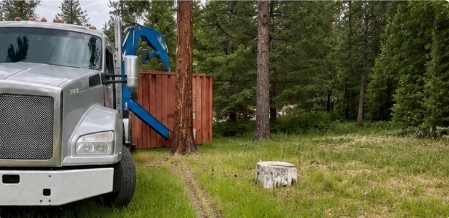
Successful container transportation depends on more than selecting the right trailer or lifting equipment. The delivery site must provide adequate access, stable ground, sufficient clearance, and a properly prepared placement area.

Before dispatch, Container Movers may confirm site conditions such as slope, soil stability, overhead obstructions, gate width, turning space, and the intended placement location. Preparing these details in advance helps prevent delivery delays, additional charges, equipment damage, and unsafe placement conditions.

Container delivery truck moving through a wooded site with limited access

1. Ground Conditions

Containers should be placed on a firm, level, and well-drained surface. Suitable foundations may include:

  • Compacted gravel
  • Concrete pads
  • Railroad ties
  • Structural footings
  • Engineered container supports

Soft soil, mud, loose gravel, or uneven terrain can cause the container to settle, twist, or become misaligned. Poor ground conditions may also prevent safe access or completion of the delivery.

2. Access and Clearance

The delivery route must provide enough room for the truck, trailer, or sidelifter to enter, maneuver, unload, and exit safely.

Customers should confirm:

  • Gate and driveway width
  • Turning radius
  • Overhead wires and tree limbs
  • Low branches or structures
  • Road and driveway weight limitations
  • Clearance for trailer tilt or lifting equipment

The amount of clearance required will depend on the delivery equipment selected for the move.

3. Placement Area

The final placement location should be clearly identified before the driver arrives. The area should be level, accessible, and free of vehicles, debris, landscaping materials, and other obstructions.

Residential and commercial customers should also verify property boundaries, utility locations, drainage patterns, and any local site restrictions before placement.

Mark the exact placement location before the driver arrives and keep the area clear throughout the delivery.

Not sure whether your site is ready?

Share photos, measurements, and access details when requesting your quote. Container Movers can help identify potential delivery concerns before dispatch.

Request an Accurate Quote

Major Ports, Rail Facilities, and Freight Infrastructure

South Carolina's freight network is unusually interconnected for a state of its size. The Port of Charleston provides access to international shipping, while Inland Port Greer and Inland Port Dillon move containers farther inland by rail. I-26 connects Charleston with Columbia and the Upstate, while I-85, I-95, I-20 and I-77 connect South Carolina with major Southeast manufacturing and distribution markets.

Port of Charleston

The Port of Charleston is South Carolina's principal international container gateway and a major source of port drayage and intermodal container transportation. Its marine terminals connect importers, exporters, manufacturers, warehouses and distribution centers throughout South Carolina and the Southeast with global shipping networks.

Wando Welch & Hugh K. Leatherman Terminals

Wando Welch Terminal and Hugh K. Leatherman Terminal are key container facilities within the Port of Charleston system. Container moves originating at these terminals may require marine-terminal drayage, chassis coordination, warehouse delivery, intermodal rail connections or transfer to specialized equipment for final placement.

Inland Port Greer

Inland Port Greer extends Charleston's container network directly into the Upstate manufacturing and distribution market. Located near I-85 between Charlotte and Atlanta, the terminal connects the Port of Charleston with manufacturers, suppliers, warehouses and distribution operations across the Upstate and surrounding Southeast markets.

Inland Port Dillon

Inland Port Dillon serves the Pee Dee region and eastern Carolinas from a strategic location near I-95. Rail service connects Dillon with Charleston, providing manufacturers, retailers, agricultural exporters and other cargo owners an inland option for moving loaded and empty containers.

Charleston Rail & Drayage Connections

Charleston connects with major rail networks that move containerized freight toward inland markets throughout the Southeast and Midwest. Local drayage provides the critical truck connection between marine terminals, rail facilities, warehouses and final destinations.

Connected Freight Corridors

I-26 provides the primary highway connection between Charleston, Columbia and the Upstate, while I-85 serves the Greenville-Spartanburg manufacturing corridor. I-95 supports north-south freight through the Pee Dee and eastern South Carolina, and I-20 and I-77 connect the state with additional Southeast markets.

Industries and Customers We Serve Throughout South Carolina

Commercial and Industrial Customers

South Carolina's container transportation demand is closely tied to international trade, advanced manufacturing, automotive production, aerospace, warehousing, construction and distribution. Charleston provides direct access to global container shipping, while the Upstate has developed into one of the Southeast's major manufacturing and logistics markets.

Importers, Exporters & Distribution Centers: Businesses connected with the Port of Charleston use containers to move imported and exported products between marine terminals, rail facilities, warehouses and distribution centers. These projects may involve drayage, intermodal rail and longer-distance transportation.

Automotive & Advanced Manufacturing: Greenville, Spartanburg, Greer and surrounding Upstate communities support extensive automotive, machinery and advanced manufacturing operations. Containers transport components, tooling, production equipment, raw materials and finished inventory within these supply chains.

Aerospace & Industrial Operations: Charleston and other South Carolina manufacturing markets support aerospace and industrial production requiring secure transportation of equipment, components and specialized materials.

Warehousing & Logistics: Distribution centers along the I-26 and I-85 corridors use containers for imported inventory, export freight, overflow storage and movement between port, rail and warehouse facilities.

Construction & Infrastructure: Contractors use shipping containers for secure jobsite storage, tools, equipment, materials and temporary operational space on commercial, industrial, highway and development projects.
Residential, Farm and Rural Customers

South Carolina homeowners, farmers, rural property owners and small businesses use shipping containers for secure storage, workshops, equipment protection and property improvements. Delivery requirements vary significantly between growing suburban communities, Lowcountry properties and agricultural land throughout the Midlands and Pee Dee.

Residential Customers: Containers provide practical storage during renovations, moving projects, garage construction and property improvements. Driveway width, overhead utilities, neighboring structures and final placement space should be evaluated before delivery.

Farms & Agricultural Properties: South Carolina farms and agricultural businesses use containers for machinery parts, tools, irrigation equipment, feed-related supplies, maintenance materials and seasonal storage. Rural deliveries may involve unpaved roads, drainage ditches and soft ground.

Coastal & Recreational Properties: Lowcountry and coastal properties may use containers for equipment, maintenance supplies and secure storage. Sandy soil, heavy rainfall, storm exposure and restricted access can influence the transportation and placement method.

Customers We Commonly Serve:

  • Importers & Exporters
  • Automotive Manufacturers
  • Aerospace & Advanced Manufacturers
  • Warehouses & Distribution Centers
  • Construction Companies
  • Agricultural Operations
  • Municipalities
  • Educational & Institutional Facilities
  • Small Businesses
  • Residential Property Owners

Commercial and Residential Container Applications

Shipping containers take on different roles across South Carolina depending on the region and customer. Charleston and the Lowcountry connect containers with international trade, port drayage and construction, the Upstate emphasizes manufacturing and distribution, while the Midlands and Pee Dee add agriculture, commercial storage and rural property applications.

Port Drayage

Intermodal Transfers

Warehouse Overflow

Distribution Staging

Automotive Manufacturing Support

Construction Site Storage

Jobsite Offices

Equipment Storage

Agricultural Supplies

Farm Equipment Storage

Municipal Operations

Temporary Commercial Storage

Residential Storage

Workshops

Renovation Projects

Rural Property Storage

The intended use of a container should influence how it is transported and unloaded. A container moving from the Port of Charleston to an Upstate manufacturing facility requires a different transportation plan from one that must be placed directly on the ground at a farm, construction site or residential property.

South Carolina Container Transportation Coverage

Charleston & The Lowcountry

Charleston, North Charleston, Mount Pleasant, Summerville and surrounding Lowcountry communities form the center of South Carolina's international container market. Transportation frequently involves Port of Charleston drayage, marine terminals, rail yards, warehouses, manufacturing facilities and construction projects.

Coastal flooding, heavy rainfall, sandy soils and dense development can also make final-site evaluation especially important.

Greenville-Spartanburg & The Upstate

Greenville, Spartanburg, Greer, Anderson and surrounding Upstate communities form one of the Southeast's strongest automotive, advanced manufacturing and distribution markets. Inland Port Greer and the I-85 corridor connect these businesses with Charleston and major markets between Charlotte and Atlanta.

Container transportation frequently supports manufacturing plants, suppliers, distribution centers, warehouses and construction projects requiring loaded freight movement or specialized placement.

Columbia & The Midlands

Columbia and the Midlands sit at the intersection of I-20, I-26 and I-77, giving the region strong highway connections to Charleston, the Upstate and neighboring states. Manufacturing, warehousing, government, education, healthcare and construction create diverse demand for shipping container transportation.

Urban and suburban deliveries may require evaluation of traffic, driveway access, overhead utilities and maneuvering space before final placement.

Florence, Dillon & The Pee Dee

Florence, Dillon and the Pee Dee region combine agriculture, manufacturing, distribution and I-95 freight activity. Inland Port Dillon provides a rail connection with Charleston and gives businesses in eastern South Carolina an important intermodal option.

Rural properties throughout the region may introduce narrow roads, drainage ditches, unpaved entrances and soft ground that affect container delivery equipment.

Rock Hill & The Catawba Region

Rock Hill, Fort Mill and surrounding northern South Carolina communities benefit from proximity to Charlotte and access to the I-77 corridor. Manufacturing, distribution, construction and rapid residential growth generate container transportation demand throughout the region.

Cross-market freight between Charlotte and South Carolina adds another important logistics component, while growing residential areas can present tighter placement conditions.

Grand Strand & Coastal South Carolina

Myrtle Beach, Georgetown and surrounding coastal communities combine tourism, construction, commercial development, residential growth and maritime-related activity. Containers are used for construction storage, equipment, commercial inventory and property improvements.

Coastal storms, saturated ground, sandy soils and restricted access should be considered before heavy container-moving equipment is dispatched.

Why South Carolina Businesses and Property Owners Choose Container Movers

A South Carolina container move may begin at a Charleston marine terminal, Inland Port Greer or Dillon, an Upstate manufacturing plant, a Midlands warehouse or a residential property along the coast.

Container Movers helps coordinate the transportation as one project — considering container size, loaded weight, terminal requirements, drayage, highway transportation, site access, unloading and final placement before the move begins.

  • Loaded container transportation
  • Empty container relocation
  • Port of Charleston pickups
  • Inland Port Greer pickups
  • Inland Port Dillon pickups
  • Ground-level placement
  • Sideloader transportation
  • Port and intermodal drayage coordination
  • Rail terminal transportation
  • Manufacturing and warehouse support
  • Construction site delivery
  • Farm and rural placement
  • Residential container delivery
  • Statewide and nationwide transportation

By coordinating terminal requirements, transportation equipment, site access, unloading and final placement through one experienced logistics team, Container Movers helps South Carolina customers simplify scheduling, reduce unnecessary handling and avoid preventable project delays.

Frequently Asked Questions About South Carolina Container Transportation

Find answers to common questions about loaded and empty shipping container transportation, Port of Charleston drayage, Inland Port Greer and Dillon pickups, intermodal transfers, residential delivery, specialized equipment and ground-level placement throughout South Carolina.

Pricing depends on transportation distance, container size, loaded weight, required equipment, port or rail involvement, drayage, site access and final placement.

Port of Charleston and inland-port moves may also involve terminal procedures, chassis arrangements or appointment requirements. Complete project information helps determine an accurate quote.

Yes. Container Movers coordinates qualifying port drayage associated with Port of Charleston terminals. Container availability, terminal release information, chassis requirements and the inland destination should be confirmed before dispatch.

Qualifying transportation can be coordinated from Charleston marine terminals when the container has been released and terminal pickup requirements are satisfied. The final transportation and unloading method should be determined before the container leaves the terminal.

Yes. Container transportation can be coordinated from Inland Port Greer for qualifying projects when terminal access and container availability are confirmed. Greer serves the Upstate manufacturing and distribution market and connects inland freight with Charleston.

Yes. Qualifying container transportation can be coordinated from Inland Port Dillon when terminal release and carrier requirements are met. Dillon is especially useful for freight serving the Pee Dee, I-95 corridor and eastern Carolinas.

Yes. Container Movers coordinates transportation for both loaded and empty shipping containers. Container dimensions, cargo and total gross weight are important when selecting the carrier, trailer, route and unloading method.

Yes, when site conditions and equipment allow it. Sideloaders, Landoll trailers, tilt-bed equipment and crane-assisted configurations provide different options for unloading a container from the trailer and positioning it at ground level.

Container Movers coordinates transportation for common 20-foot, 40-foot and 45-foot shipping containers, including many High Cube containers. Specialty and modified units may also be transported after dimensions, weight and site requirements are reviewed.

Yes. Container Movers coordinates rural and agricultural deliveries throughout South Carolina. Farm lanes, gates, drainage ditches, low branches, soft shoulders, sandy soil and available turning space should be evaluated before heavy equipment arrives.

Yes, when the site can accommodate the required transportation and unloading equipment. Driveway width, turning room, overhead utilities, neighboring structures, ground conditions and final placement should be reviewed before delivery.

Hurricanes, tropical systems and heavy rainfall can affect both transportation schedules and final-site conditions, especially in Charleston, the Lowcountry and other coastal areas. Saturated or flooded ground may not safely support heavy container-moving equipment.

Yes. Container Movers coordinates transportation for automotive, aerospace, machinery, advanced-manufacturing and industrial projects throughout South Carolina. Loaded weight, facility procedures and delivery timing should be reviewed before dispatch.

Depending on the project, equipment may include container chassis, flatbeds, sideloaders, Landoll trailers, tilt-bed trailers and crane-assisted configurations. The correct option depends on both transportation and final-placement requirements.

Yes. Container Movers coordinates transportation throughout South Carolina, including Charleston, North Charleston, Columbia, Greenville, Spartanburg, Greer, Rock Hill, Florence, Dillon, Myrtle Beach, Beaufort and surrounding communities.

Many modified containers can be transported after their overall dimensions, total weight, structural modifications, lifting points and exterior attachments are reviewed. Photos and accurate measurements should be provided before transportation is scheduled.

Provide the pickup and delivery addresses, container size, loaded or empty status, estimated total weight, current container position, desired final placement and site photographs.

For port or inland-terminal moves, also provide the terminal, available release information and relevant pickup details.

Still Have Questions About Your South Carolina Container Move?

Tell us where the container is located, where it needs to go, whether it is loaded or empty and how you want it positioned. If the move involves the Port of Charleston, Inland Port Greer, Inland Port Dillon or another terminal, include that information so our team can help identify the drayage, equipment and transportation requirements needed for an accurate quote.

Request an Accurate Quote

Need a Shipping Container Moved in South Carolina?

From Port of Charleston drayage and Inland Port Greer or Dillon pickups to manufacturing facilities, warehouses, construction sites, farms and residential properties, Container Movers coordinates shipping container transportation throughout South Carolina.

Tell us where the container is located, where it needs to go, whether it is loaded or empty and how you want it positioned. Our team can help identify the transportation equipment, drayage and placement requirements needed for an accurate quote.