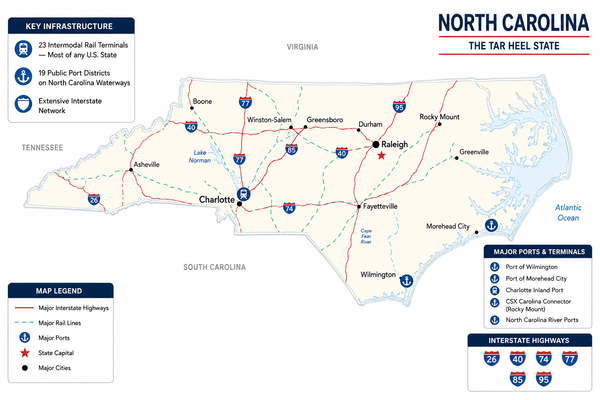
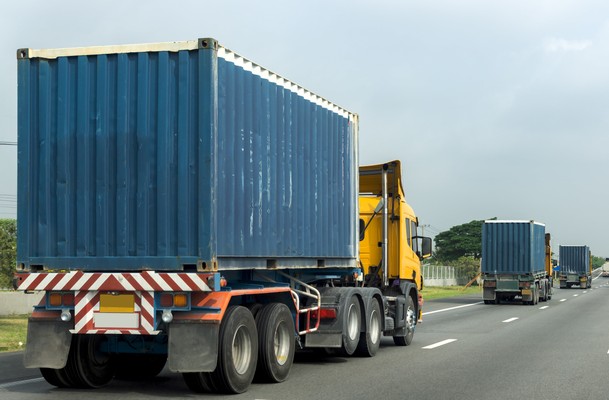
North Carolina's economy creates container transportation demand across international trade, manufacturing, logistics, construction, agriculture and advanced industry. The Port of Wilmington connects the state with global container shipping, while Charlotte, the Triangle and Piedmont Triad support major concentrations of manufacturing, warehousing, technology and distribution.
Importers, Warehouses & Distribution Centers: Businesses connected with the Port of Wilmington and inland freight markets use containers to move imported products between marine terminals, rail facilities, warehouses and distribution centers. These projects may involve port drayage, intermodal transportation and longer-distance trucking.
Manufacturing & Advanced Industry: North Carolina manufacturers use shipping containers for machinery, tooling, automotive components, aerospace equipment, production materials and finished products. Manufacturing activity across Charlotte, the Triad and Triangle creates demand for both loaded container transportation and industrial storage.
Furniture, Textiles & Consumer Products: The Piedmont's long-established furniture, textile and consumer-products industries use containers for production materials, equipment, components and finished inventory. Transportation planning must account for loaded weight and access to manufacturing and warehouse facilities.
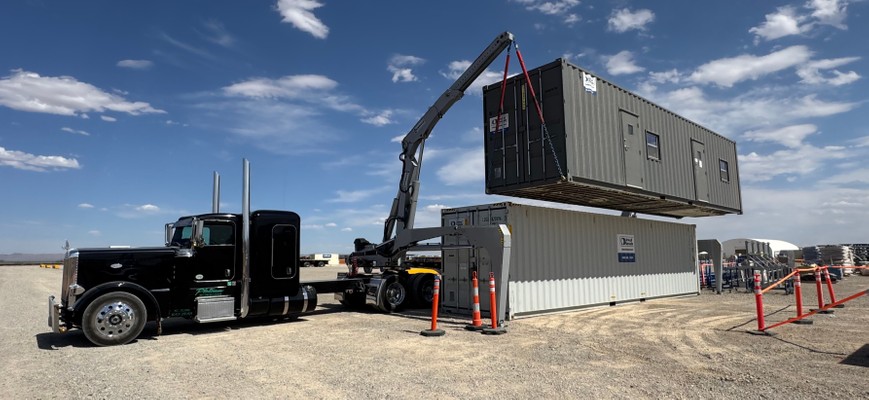
Construction & Development: Contractors throughout North Carolina use containers for tools, equipment, building materials and secure jobsite storage. Rapid development in Charlotte, Raleigh-Durham and other growing markets creates frequent demand for temporary storage and container relocation.
Food Processing & Agribusiness: Food processors, agricultural suppliers and distribution operations use containers for equipment, ingredients, packaging materials and seasonal inventory. Eastern North Carolina's agricultural economy adds substantial demand for secure equipment and supply storage.