Who Can Move a Shipping Container? (And Who Shouldn’t)
Container Movers is a nationwide container moving carrier specializing in the safe, efficient transport and placement of fully loaded and empty shipping containers across the United States. We deploy the most appropriate container-handling method for each move—including specialized sideloaders where available—to achieve precision lifting, reduced site disruption, and faster turnaround times. Through detailed site assessments, experienced carrier operations, and access to unique, specialized equipment, we deliver dependable container moving solutions for residential and construction sites, industrial facilities, ports, and distribution centers nationwide.
Founded to solve persistent challenges in U.S. container logistics, Container Movers was built around a simple principle: every container move requires the right equipment, the right planning, and the right execution. We focus on delivering consistency, safety, and technical expertise—particularly in environments where traditional methods create delays, added risk, or limited placement options. This operational discipline allows us to scale nationwide while maintaining precision, communication, and accountability on every move. Moving a shipping container is not a standard moving job. These steel units can weigh thousands—or even tens of thousands—of pounds, and relocating them safely requires specialized equipment, training, and planning. Yet many people searching “who moves shipping containers” or “who can move a 40 ft shipping container” assume any trucking or moving company can handle it.
That assumption often leads to damaged property, safety incidents, or failed deliveries.
This guide explains who is actually qualified to move a shipping container in the United States, who isn’t, and how to make a smart, informed decision.
Why General Trucking Companies Don’t Cut It
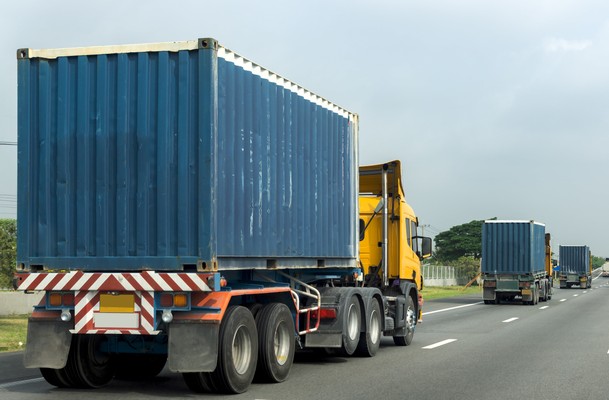
Although shipping containers are transported daily on highways, most general trucking companies do not have the capacity or capability to move a container.
The reason is simple: container transport is a specialized segment of logistics that requires equipment and procedures most trucking firms don’t maintain.
Key limitations of general trucking companies include:
No container-specific trailers or lifting systems
Most trucking companies do not own container chassis or hydraulic lifting equipment. Containers are typically loaded at ports using port-owned chassis or cranes—not by the trucking company itself. When a container is sitting on the ground, many truckers simply cannot load it.
No ground-loading capability
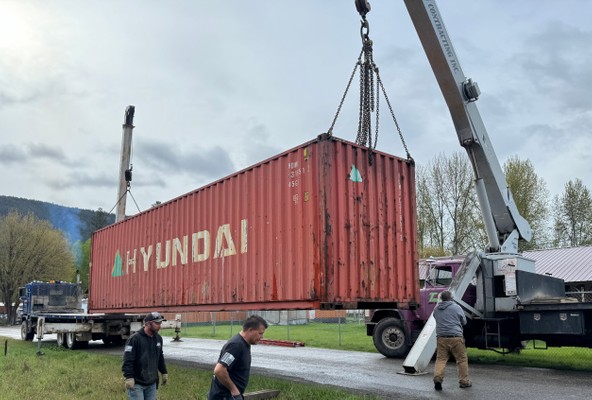
Household movers and freight haulers are designed to load pallets or boxed goods at docks—not lift steel containers off the ground. Without cranes, sideloaders, or heavy-duty tilt systems, they cannot safely perform the move.
Operational and regulatory complexity
Container moves often involve weight restrictions, permit coordination, route planning, and site access challenges. Many general carriers avoid container jobs altogether because they fall outside their core operations.
In contrast, dedicated container moving companies specialize in these exact challenges. Firms like Container Movers operate equipment such as side loader trailers, tilt-bed systems, cranes, and container chassis specifically designed for safe container relocation.
Required Equipment to Safely Move Shipping Containers
Shipping containers are not forgiving objects. Moving them safely depends on purpose-built equipment designed to handle extreme weight and maintain balance throughout the move.
Side Loader Trailers (Sidelifters)
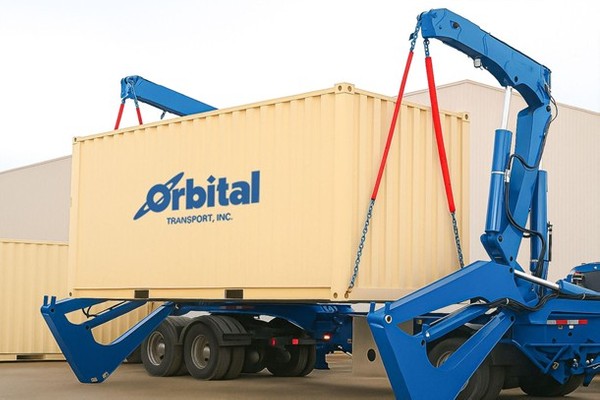
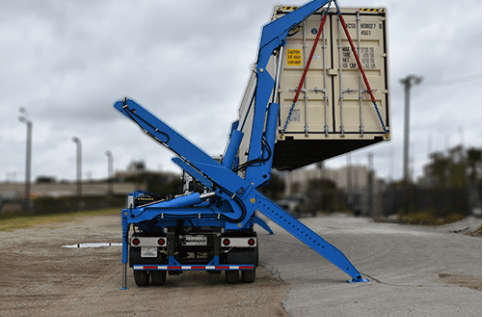
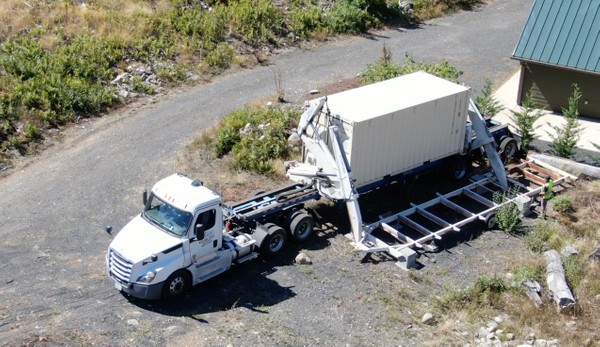
A side loader is one of the most effective tools for container relocation. These trucks are equipped with hydraulic lifting arms that raise containers from the ground and place them onto the trailer while keeping the container level.
Side loaders are capable of:
Lifting fully loaded 20 ft and 40 ft containers
Maintaining balance and preventing tipping
Loading and unloading without external cranes
Operating efficiently in residential and commercial settings
Because containers are lifted from all four corners, side loaders minimize structural stress and reduce the risk of shifting contents. For many moves, they are the safest and most cost-effective solution.
Weight and Center-of-Gravity Control
Knowing the weight of your loaded container is crucial to not only the move, but will prevent over spending and dry run fees.
To ensure a safe load you'll need to verify the following:
Weight is evenly distributed, heaviest of weight being in the center of the container working outward towards each end.
All delicate items are secured, strapped, and lain down flat in the container.
There is nothing liquid that can spill over and that there is nothing hazardous.
The corner castings on each corner of your container is accessible, rust-free, and physically attached to the container (if you do not have corner castings, you might not have a standard shipping container and we would require photos prior to quoting)
The ground the container and equipment will be on is solid, dry, and even.
Risks of Hiring Non-Specialized Movers
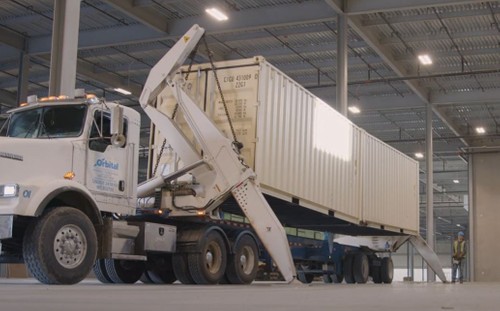
Hiring an unqualified mover—or attempting a DIY container move—introduces serious risks.
Insurance Gaps
Non-specialized movers may not carry insurance that covers container lifting or heavy-load transport. If something goes wrong, you may be financially responsible for property damage or injuries.
Equipment Damage
Improvised methods—dragging containers, underpowered forklifts, or incorrect trailers—can damage:
The container itself
Driveways, asphalt, and landscaping
Internal cargo
Safety Hazards
Containers are heavy, rigid, and unforgiving. Improper handling can result in:
Serious injuries
Crushed vehicles or structures
Dropped or tipped containers
Specialized movers mitigate these risks through equipment, planning, and experience.
Legal and Permit Issues
Container weight MOST of the time is considered to be a "Divisible Load" - Meaning, if the weight inside can be broken up into smaller shipments, it MUST be broken down into smaller shipments.
For local moves, lighter containers are always easier unless there is a sideloader local to the area.
For longer hauls, it's best not to exceed 40,000lbs total weight.
Side Loader vs. Crane — When Each Is Required
When a Side Loader Is Best
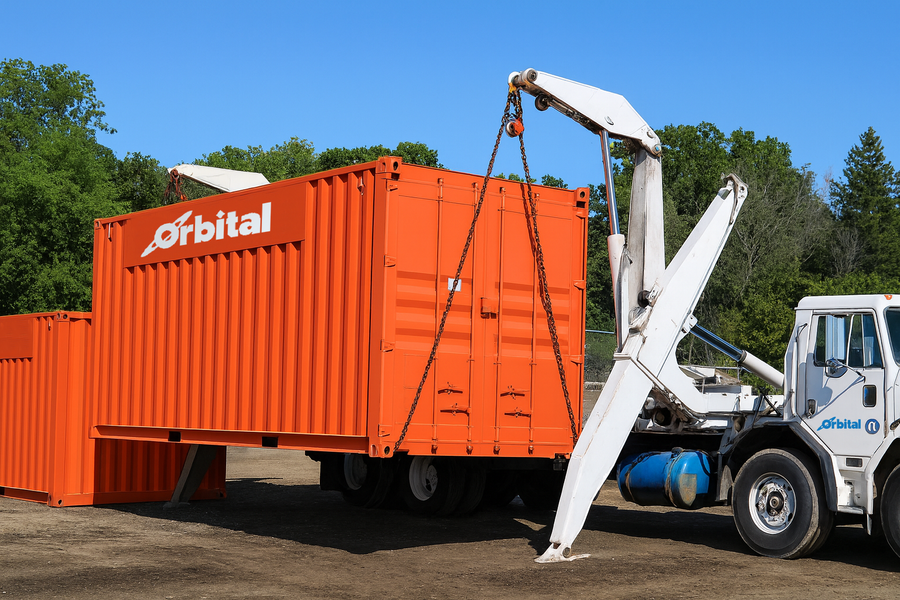
Side loaders are ideal when:
The container is loaded
The truck can park adjacent to the placement location
Ground placement is acceptable
Speed and efficiency are priorities
They are commonly used for residential deliveries, commercial storage, and job sites with adequate access.
When a Crane Is Required
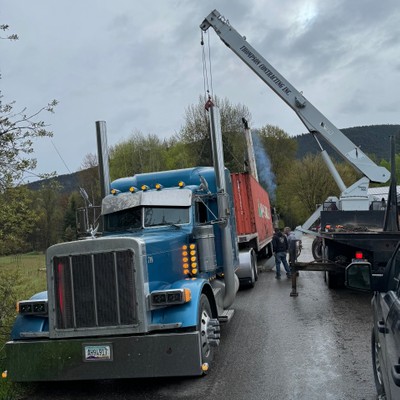
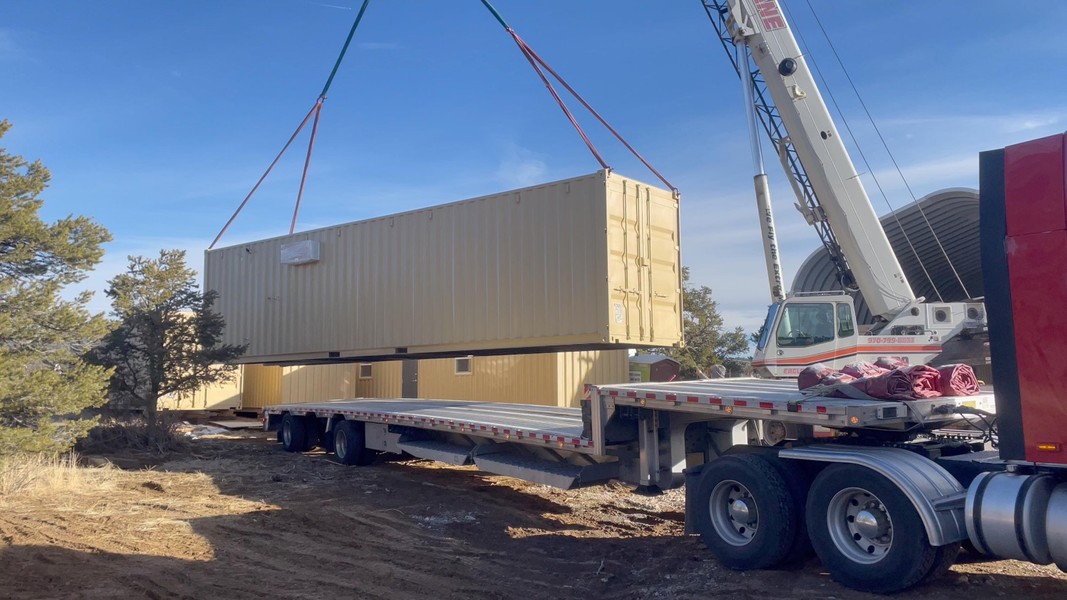
A crane may be necessary if:
The container must be placed far from truck access
Obstacles such as buildings or fences are present
Containers are being stacked
Vertical placement is required
Cranes add flexibility—but also add cost and complexity. Smaller truck-mounted cranes, like rotator trucks, could handle the heavier containers as well. But those come with a premium and average $700-$1000/hr.
A qualified container mover will evaluate the site and recommend the safest, most practical method.
Permit Handling and Route Planning
In the U.S., container dimensions are usually within legal limits—but weight often is not.
Loaded containers may require:
Axle weight compliance
Specialized trailers
Pre-approved routes
Professional container movers manage these logistics internally, ensuring compliance with state and federal regulations. Attempting a move without proper permitting can result in fines, delays, or load impoundment.
Site Inspections — Why They Matter
Successful container moves depend heavily on site conditions.
Professional movers assess:
Truck access and turning radius
Ground stability and slope
Overhead clearance (power lines, trees, structures)
Placement surface and drainage
Poor site preparation can halt a move or cause damage. Experienced movers ask detailed questions—or request photos—before dispatching equipment. This preparation protects both the customer and the crew.
Checklist — Questions to Ask Any Container Moving Company
![reasonsIcon[1].png](https://static.spacecrafted.com/bda5f7aa080047deb4815a39a626dc0d/i/d73f1e31d2ef483c9a344c6cf1110813/2/4SoifmQpDrHbZJ6Vvf4aQ/reasonsIcon%5B1%5D.png)
Responsive Support
Before hiring a container mover, ask:
How many shipping container moves have you completed?
What equipment will you use to load and unload the container?
Are you insured specifically for container lifting and transport?
Do you handle permits and regulatory compliance?
Will you assess site access before the move?
Can you explain the full move plan and timeline?
Clear, confident answers indicate real experience. Vague responses are a warning sign.
Final Takeaway
Not everyone who owns a truck is qualified to move a shipping container.
Qualified container movers use specialized equipment, understand weight and safety dynamics, manage permits, and plan for site conditions. General movers and standard trucking companies typically do not.
By understanding who should move a container—and who shouldn’t—you reduce risk, protect your property, and ensure the move is done safely and legally.
This knowledge helps you make the right decision before a container ever leaves the ground.
Contact Us for Your Container Move & Transport
Whether you're relocating a single loaded container or coordinating multi-site logistics, Container Movers delivers the equipment, operational knowledge, and standardized processes required for safe, reliable container handling nationwide.
Contact our team to schedule a move or request a technical consultation.