
Shipping Container
Transportation in Texas
Texas' trusted partner for shipping container transportation, port logistics, intermodal transfers, residential delivery and specialized container placement.
ContainerMovers.com helps coordinate safe, reliable container transportation throughout Texas, including commercial facilities, construction sites, farms, ranches, rail yards, ports and residential properties.
Complete Container Moving Solutions
From port pickups and rail transfers to residential delivery and ground-level placement, our network helps move containers where they need to go.
- Loaded container transportation
- Empty container relocation
- Port pickups and rail transfers
- Residential container delivery
- Ground-level placement
- Nationwide carrier network
- Licensed and insured providers
- Experienced logistics team
- Accurate quote response
Loaded Containers
Port Pickups
Rail Transfers
Residential Delivery
Nationwide Service
Why Container Transportation Matters in Texas
Few states generate as much demand for shipping container transportation as Texas.
The state's economy is supported by a diverse mix of industries including energy, manufacturing, logistics, construction, agriculture, technology, international trade, and infrastructure development. Each of these industries relies on containerized transportation and storage solutions in different ways.
Texas freight moves through:
- Port Houston
- Port of Corpus Christi
- Port of Brownsville
- AllianceTexas Inland Port
- BNSF Railway Facilities
- Union Pacific Rail Network
- Interstate 10, Interstate 20, Interstate 35, and Interstate 45
- Texas-Mexico Trade Corridors
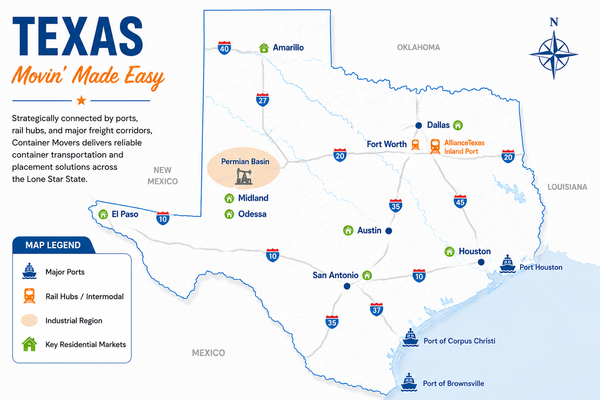
Ports: Gulf Coast container movement
Rail: Statewide intermodal networks
Trade: U.S.-Mexico freight corridors
Containers Are More Than Freight in Texas
Shipping containers are no longer used solely for international freight. Throughout Texas, containers serve as practical tools for commercial, industrial, agricultural, and residential needs.
Commercial Uses
Construction site storage, jobsite offices, equipment staging, manufacturing support assets, and industrial operations.
Energy & Agriculture
Agricultural storage solutions, oilfield support units, ranch equipment storage, and project staging in remote areas.
Residential Uses
Residential storage buildings, container homes, tiny homes, workshops, garage conversions, and property improvements.
Because containers often become part of ongoing operations, transportation and placement are equally important.
What Companies and Property Owners Look For in a Container Transportation Provider
When businesses and property owners hire a container transportation company, they are typically trying to solve a larger problem than simply moving a container.

Reliability
Construction projects, manufacturing operations, oilfield activities, and residential development projects all operate on schedules. Delayed container deliveries can impact productivity, project timelines, and costs.

Safe Transportation
Loaded shipping containers can weigh tens of thousands of pounds. Proper transportation equipment, route planning, and experienced operators are essential.

Ground-Level Placement
Most customers need their containers placed exactly where they will be used. This often requires specialized equipment capable of unloading and positioning containers without additional lifting services.

Site Accessibility Expertise
Container deliveries frequently involve narrow access roads, limited maneuvering space, soft ground conditions, construction activity, utility conflicts, fencing, trees, and rural properties.

Port and Intermodal Experience
Containers moving through ports and rail facilities require familiarity with terminal operations, scheduling systems, equipment requirements, and intermodal procedures.

Single-Vendor Coordination
Many customers prefer one provider capable of handling transportation, unloading, and placement rather than coordinating separate trucking and crane companies. This approach reduces scheduling conflicts, project complexity, and costs.
Common Container Moving Challenges in Texas
Texas presents unique logistical challenges that require specialized expertise.
Commercial and Freight Challenges
Long-Distance Transportation: Texas covers more than 268,000 square miles. A move between Houston and El Paso can exceed 700 miles, requiring careful route planning and scheduling.
Urban Congestion: Major metropolitan areas including Houston, Dallas-Fort Worth, Austin, and San Antonio experience heavy traffic that can affect transportation schedules and delivery windows.
Port Congestion: Container pickups may be affected by vessel schedules, terminal traffic, equipment availability, customs processing, and gate appointments.
Rail Yard Scheduling: Intermodal facilities often operate under strict scheduling systems. Missing a pickup window can impact transportation timelines and project schedules.
Site, Weather, and Residential Challenges
Remote Delivery Locations: Energy operations, ranches, farms, infrastructure projects, and industrial developments are often located far from major transportation corridors.
Weather Conditions: Texas transportation projects may encounter hurricanes, coastal flooding, severe thunderstorms, high winds, extreme temperatures, and winter weather events.
Residential Access Challenges: Residential deliveries frequently involve long driveways, trees, utility lines, landscaping, limited turning space, and soft ground conditions.
Proper equipment selection is critical to successful placement.
Specialized Equipment Used to Move Shipping Containers
Not every container move requires the same equipment. Selecting the proper transportation and placement solution can significantly impact project efficiency and cost.
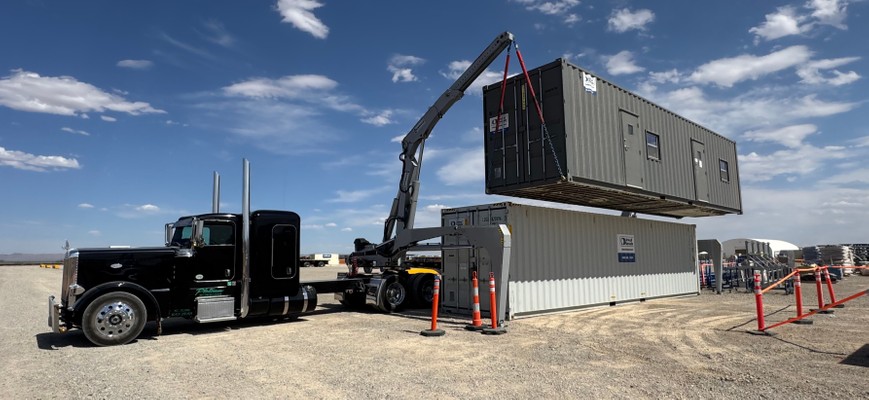
What Is a Sideloader?
A sideloader is specialized container handling equipment that loads, unloads, and places shipping containers from the side of the trailer.
Sideloaders are particularly valuable when ground-level placement is required, space is limited, crane access is unavailable, or scheduling flexibility is important.
- Reduced project costs
- Faster delivery scheduling
- Improved placement flexibility
- Fewer vendors
- Increased efficiency
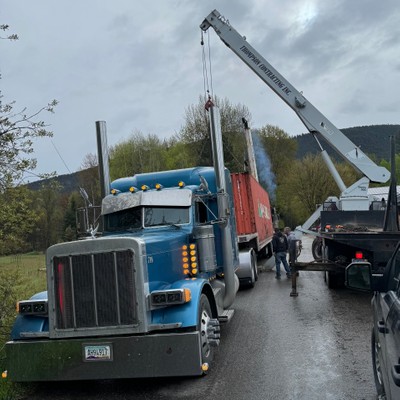
What Is a Trailer-Mounted Crane?
Trailer-mounted cranes provide lifting capabilities for projects requiring precise placement or access to challenging locations.
These systems are commonly used when containers need to be positioned in areas where standard unloading methods are impractical.
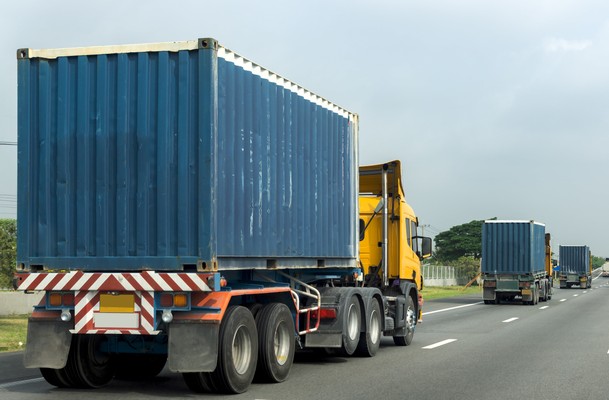
What Is a Container Chassis?
A container chassis is a specialized trailer designed specifically for transporting ISO shipping containers between ports, rail facilities, warehouses, construction sites, and private properties.
Can Containers Be Moved Without a Crane?
Yes. Many container transportation projects can be completed using sideloaders, eliminating the need for separate crane mobilization and reducing overall project costs.
Residential Delivery Equipment
Residential container deliveries often require sideloaders, trailer-mounted cranes, container chassis, and site access planning.
Major Ports, Rail Facilities, and Freight Infrastructure
Texas benefits from some of the most advanced freight infrastructure in North America.
Port Houston
Port Houston is one of the busiest container ports in the United States and serves as a major gateway for imports and exports throughout Texas and the Midwest.
Port of Corpus Christi
The Port of Corpus Christi supports energy exports, LNG facilities, petrochemical development, and industrial logistics.
Port of Brownsville
Located near the Texas-Mexico border, the Port of Brownsville supports manufacturing, international trade, and industrial development.
AllianceTexas Inland Port
AllianceTexas is one of the nation's leading inland logistics hubs, integrating rail transportation, trucking, air cargo, warehousing, and distribution.
Rail Infrastructure
Union Pacific and BNSF Railway networks provide critical intermodal transportation services throughout Texas.
Connected Movement
These facilities support efficient movement of containers between ports, distribution centers, warehouses, manufacturing facilities, and project sites.
Industries and Customers We Serve
Commercial and Industrial Customers
Construction and Infrastructure: Construction companies use shipping containers for equipment storage, material staging, jobsite offices, and secure storage.
Manufacturing: Manufacturers rely on containers to transport machinery, components, raw materials, and finished products.
Oil and Gas: The Permian Basin and Eagle Ford Shale generate substantial demand for container transportation supporting equipment storage, operational support, project logistics, and field offices.
Energy Development: Texas leads the nation in wind energy, solar development, LNG infrastructure, and petrochemical operations. These industries depend heavily on containerized logistics.
Warehousing and Distribution: Distribution centers throughout Texas rely on container transportation to support inventory management and supply chain operations.
Agriculture and Government: Agricultural operations use containers for equipment storage, feed storage, and operational support. Government agencies frequently require secure transportation and placement solutions for infrastructure and public works projects.
Residential, Farm, and Ranch Customers
Residential Customers: Homeowners throughout Texas use containers for storage, workshops, home renovations, property improvements, container homes, and tiny homes.
Farms and Ranches: Ranch and farm owners frequently utilize containers for equipment storage, feed storage, tool storage, hunting property support, and agricultural operations.
- Homeowners
- Container Homes
- Tiny Homes
- Workshops
- Farms
- Ranches
- Storage
- Property Improvements
Commercial and Residential Container Applications
Container transportation needs vary significantly depending on how the container will be used. Each application requires different transportation, access, and placement considerations.
Construction Storage
Jobsite Offices
Equipment Staging
Manufacturing Support
Inventory Storage
Import / Export Logistics
Disaster Recovery
Industrial Operations
Container Homes
Tiny Homes
Backyard Storage
Workshops
Garage Conversions
Ranch Storage
Farm Equipment Storage
Recreational Property
Regional Container Transportation Coverage Throughout Texas
Container transportation needs vary across Texas because each region has different industries, freight infrastructure, and site conditions.
Why Businesses and Property Owners Choose Container Movers
Container Movers provides more than transportation. We provide complete container logistics solutions.
- Loaded container transportation
- Ground-level placement
- Trailer-mounted crane services
- Rail yard transportation
- Residential container delivery
- Ranch and farm container placement
- Industrial logistics support
- Empty container relocation
- Sideloader transportation
- Port pickups
- Intermodal transfers
- Container home transportation
- Construction site delivery
- Nationwide transportation services
By combining transportation and placement through one coordinated team, we help customers reduce costs, simplify scheduling, and minimize project delays.
Frequently Asked Questions
Need a Shipping Container Moved in Texas?
Whether you're coordinating a container pickup from Port Houston, supporting a construction project in Dallas-Fort Worth, transporting equipment to a Permian Basin jobsite, relocating a container home near Austin, delivering storage containers to a ranch in West Texas, or arranging an intermodal transfer anywhere in the state, Container Movers provides a complete transportation and placement solution.
From loaded container transportation and empty container relocation to port logistics, rail transfers, residential container delivery, sideloader transportation, and precise ground-level placement, our team delivers the equipment, expertise, and coordination needed to move containers safely and efficiently throughout Texas and across the United States.